
Narramblings #11: What is truth?
Investigating investigation stories.
Every mystery game is, in essence, a search for truth. Whether it's some flavour of a whodunit or piecing together a larger story from bits of information, whether it's set in late medieval Europe or in a David Lynch-esque hotel, the general idea remains similar. You have an investigation-driven narrative and as you progress, you get closer to the truth. Now, however, we’re getting philosophical. Because what the hell is truth, anyway?
Investigative games answer that question very differently, depending on what kind of story they're telling under the surface of 'mystery'.
Spoilers ahead! For: Return of the Obra Dinn, Pentiment, Expelled, Disco Elysium
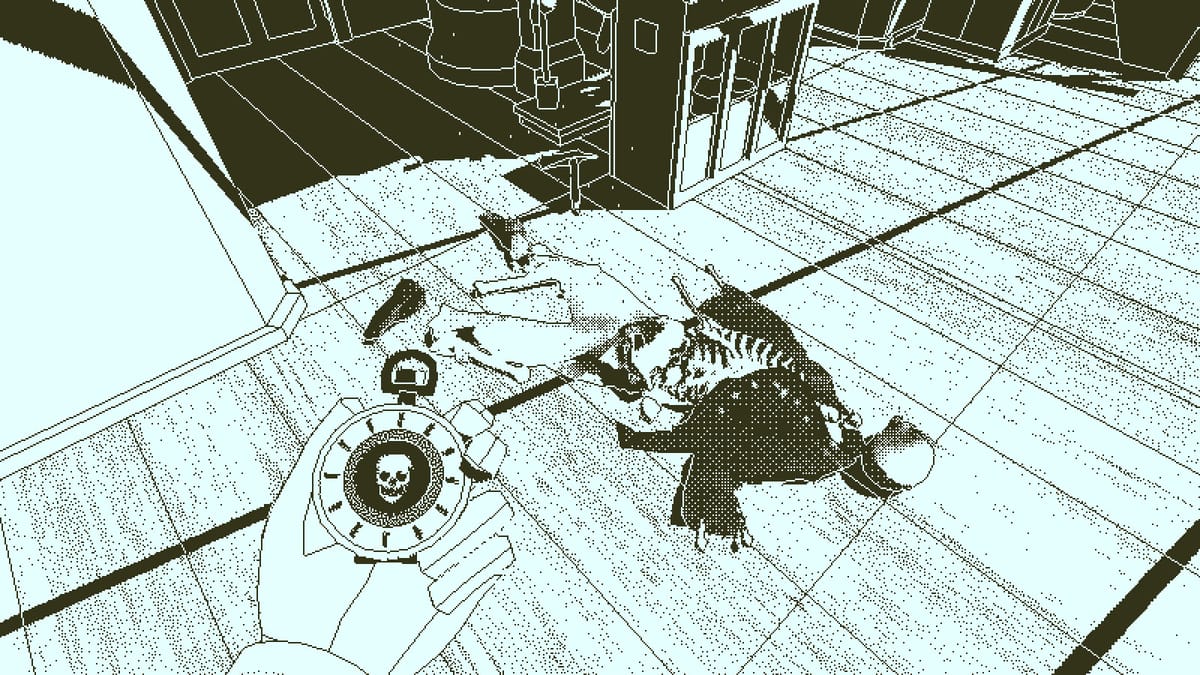
In the most straightforward type of investigative story, a truth exists independently and objectively. It does not bend or refract when we look through a different lens or the eyes of another character. It just is. Obra Dinn is a textbook example. A ship arrives at the harbour without a single soul on board and we get to investigate what happened to all the crew and passengers. Step by step, person by person we discover the tragic fates of the hundred or so people who perished during the journey. The reward for figuring out what happened to each of them is the ability to piece together the larger drama that played out aboard the ship. There is only one version of the truth and as a player, you succeed when you find it. Fittingly, the main character is an insurance investigator and the story doesn't afford them any personality beyond their job. Ultimately, it has played out before the game even began. The character is merely an observer of the objective truth.
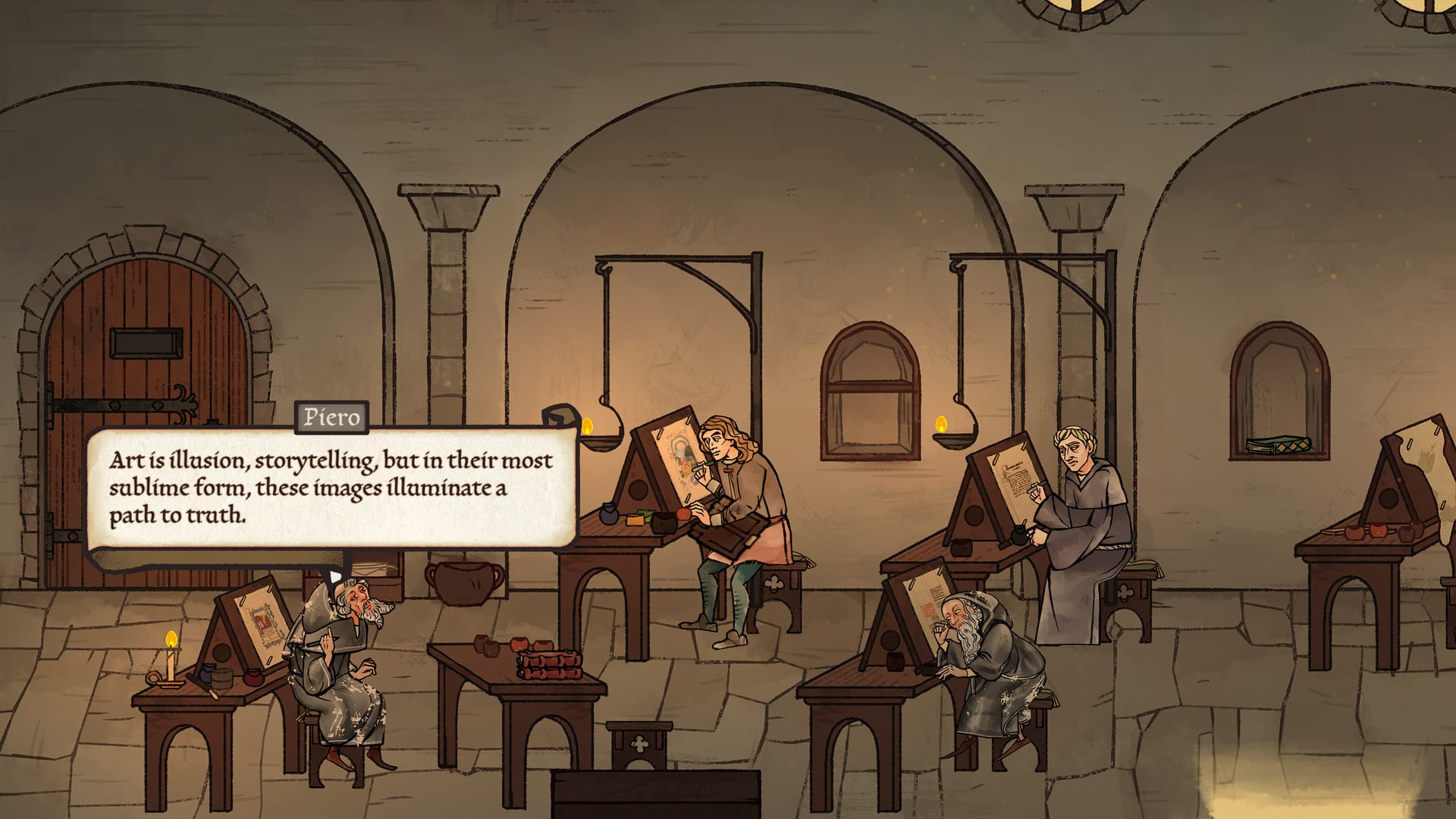
Pentiment, although also a multiple-murder mystery, is the polar opposite of Obra Dinn’s approach to truth. It treats truth not as something to discover, but as something to define. When you accuse someone based on the collected evidence, the story adapts itself to make them retroactively involved in the crime. I've heard criticism leveled at Pentiment for that because what kind of mystery has only right answers? Well, the kind that’s less interested in discovering the truth and more interested in exploring how something becomes truth. A major theme of the story is the foundational myth of Tassing, the Bavarian village where it takes place. How that myth was told and transformed over centuries, first by ancient Romans and then by pagans, until eventually getting appropriated by christians. The stories we share become our communal truth that takes precedence over objective facts. This is reflected by the investigation in which both the player and the two main characters get to choose Tassing’s truth.
Yet another variant of a quest for truth is explored in Expelled. A student in a prestigious all-girls school fell out the window... with some assistance. Our heroine Verity is a working-class kid on a scholarship so she becomes an easy scapegoat. Verity has one day to clear her name and prevent the headmistress from expelling her. We get to replay that day over and over, each loop letting us find new clues, talk to more people, and get closer to the truth. As we delve ever deeper into what’s going on at school, it becomes clear that Verity is neither a reliable narrator, nor as innocent as she’d like others to believe. An alibi becomes more important than truth. Throughout all the runs, the game tracks our Naughty Points that increase when we lie, intimidate, cheat, and so on. Acting naughty also unlocks new ways to progress and, most importantly, lets us shape the truth about who Verity is and who is she willing to become to survive the private school. A place that could be her passport to a better future but that’s also trying to remind her at every step that as a working-class girl, she does not belong. Disco Elysium couldn't be further from Expelled in terms of aesthetic but becomes surprisingly similar when we look beneath that outer layer. Here as well we have a mystery to solve but the search for truth is primarily a journey inward for detective Harry Du Bois. Sure there is a body hanging from a tree and since Harry is a cop, it falls on him to find the culprit. But when Disco Elysium starts, he doesn't even know who he is. He wakes up in the middle of a bender, so hungover he doesn't remember his own name, much less what he does for a living. And so the murder investigation provides the plot for Disco Elysium but its story is of a man navigating addiction, depression, and duty, all amid a worker’s strike ready to boil over. Looking for clues and questioning witnesses, we get to define Harry’s relationship with other people. As it happens, different voices inside his head chime in with opinions, suggestions, desires, and stray thoughts and we also shape his relationship with himself. Finding the killer at the very end is somewhat anticlimactic but in a completely purposeful way. Identifying the culprit was never the point. Identifying Harry was.
The plot requires the crime to be solved but the stories of Verity in Expelled and Harry in Disco Elysium are ultimately about those characters searching for truth about themselves in a world that doesn’t want them.
It’s interesting to look at what all this means for agency in the story. When there is a singular version of objective truth that we need to discover, like in Obra Dinn, it juxtaposes the player's agency, expressed through the investigation, and the character's agency, which is very limited. The more the truth becomes malleable, the closer player and character agency are brought together. And they align completely once the truth of the plot becomes less important than the personal truth.
So, back to the original question. What is truth? Many things at once. There is the truth of events that took place and there is the truth of the character - how they perceive themselves, others, the world around them? It's not the plot that defines where the real mystery lies but the narrative design that underpins it.